When a child, young person or adult-at-risk travels with a sporting organisation, the organisation’s duty of care may include supporting the athlete to take medication.
Top tips
- Sports must have prior written consent and dosage instructions from parents or carers to help administer medications, except in life-saving circumstances.
- Medications must be handled with care. They should be received safely from parents or carers and stored appropriately, maintaining privacy for the young athlete.
- Two authorised people should administer medications, following the administering medications checks – 7 rights
Roles and responsibilities
Sporting organisations and parents or carers need to understand their role and best practice in managing medications while travelling with athletes.
Sporting organisations
- Follows the guidelines for administering and storing medication.
- Informs and educates staff or volunteers, athletes and parent or carers on the process.
- Manages paperwork and record keeping in accordance with organisation’s privacy policy.
- Provides appropriate storage for medication during travel.
- Educates on anti-doping requirements, where required.
Parents and carers
- Completes and returns paperwork, including consent forms.
- Checks and follows international requirements relating to medication (where relevant).
- Provides medication and medical equipment to the sport.
- Updates the sport with medication requirements or changes.
- Supports the athlete to follow anti-doping requirements, where relevant.
Young athlete
- Understands their medication needs.
- Follows the direction of authorised staff or volunteers.
- Tells staff or volunteers about concerns, including when the medication is different from normal.
- Responsible for following anti-doping rules.
Authorised person
- Not required to be a qualified medical practitioner, but is nominated and approved by the organisation to support with the administration of medication.
- Follows the sport’s procedure for administering and storing medication.
- Updates the parent or carer and sporting organisation with any concerns or issues.
- Maintains privacy and security of medication and record keeping in accordance with organisation’s privacy policy.
Prescribing doctor
- Provides prescriptions and authorises the administration of medication, including self-administration.
- Advises families and athletes on the safe use of medication.
- Provides letter for athlete to travel with their medications and medical devices, if required.
- Provides letter for athlete to include hypodermic needles in carry-on bags, if required.
Before you travel
Before your sport travels, remember to educate and communicate with officials, young athletes, parents and carers.
Authorised persons
Authorised persons need to know:
- The procedures for administering medication (go to the 7 ‘rights’).
- Their role and how to complete it.
- The needs and requirements of the athletes travelling, gained through conversations with parents and the athletes before travel.
- Who to contact in case of emergency and how to contact them. This should include emergency services in the area, onsite medical services at the event and emergency contacts.
It is recommended that authorised persons receive and maintain first aid training.
Athletes and parents or carers
Athletes and parents or carers need to know:
- Sports cannot administer prescription or over-the-counter medication without prior, written consent.
- What to expect when authorised persons provide support to administer medication.
- The correct paperwork to complete.
- Medication should be in its original packaging and supplied in person or another agreed safe method. A pharmacy sticker is to be attached, including for over-the-counter medication. They need to supply enough doses to cover the whole period of travel and include an extra amount to cover emergencies or extended travel.
- If travelling overseas, a letter may be required from their doctor outlining the medication and medical devices required for their athlete.
- Who is the point of contact for medication and health matters during travel.
- Athletes should start new medication in advance of travel. This allows parents or carers to monitor for side effects and address any concerns with their doctor.
- In emergencies, sports reserve the right to seek life-saving medical treatment without prior consent. Parents or carers will be contacted as soon as possible.
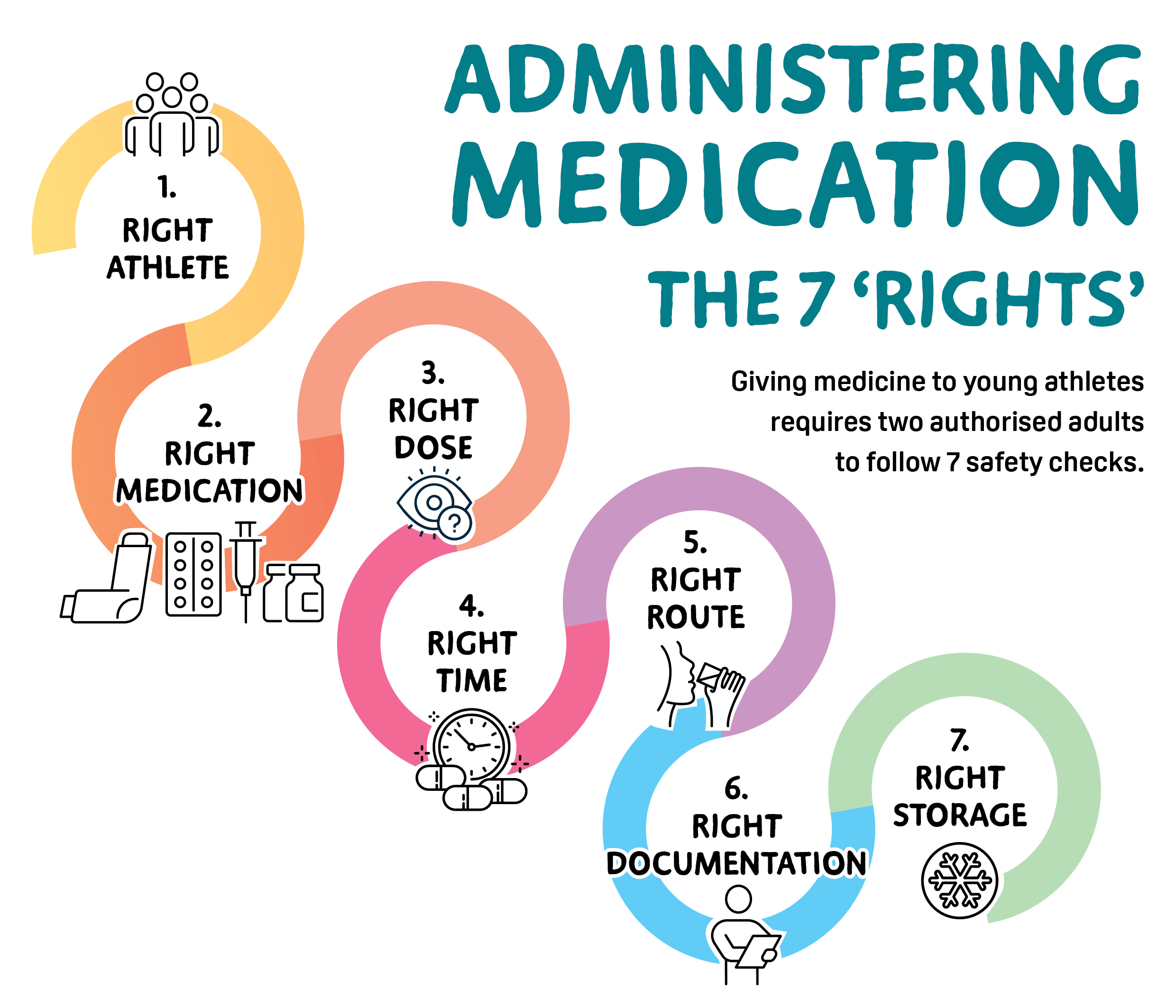
Administering medications checks – 7 rights
When administering medication you must do the two person ‘7 rights’ check.
This involves checking:
1. Right athlete
Checking against the medical consent form, ask the athlete:
- first and last name
- date of birth.
2. Right medication
Check the medication is:
- named on the consent form (note that brand, generic and active ingredient names may differ)
- in its original packaging
- within use-by date.
3. Right dose
Check the amount and strength of the dose matches the medical consent form (for example, dosing 20mg might need 2 x 10mg tablet or 1 x 20mg tablet).
If the pharmacy label does not match the consent form, check the letter from the participant’s doctor confirms the correct dose.
4. Right time
- The time matches the medical consent form.
- Specific instructions are followed (for example the medication to be taken with or after food or every 4 hours).
- If medication is taken 'as needed', check the dosage record and action plans that the specified time interval has passed.
5. Right route
Check 'the route' (for example, oral, inhaled) matches the medical consent form and medication label.
6. Right documentation
- Remember to update the dosing record once the administration is complete.
- Adhere to your organisation’s privacy policy or Australian Privacy Act.
7. Right storage
- Securely store all medication.
- Store medication according to its requirements (for example, at a certain temperature, out of direct sunlight).
- Ensure medication is returned to its original packaging and stored appropriately.
Downloadables – 7 rights
Participants self-administering medications
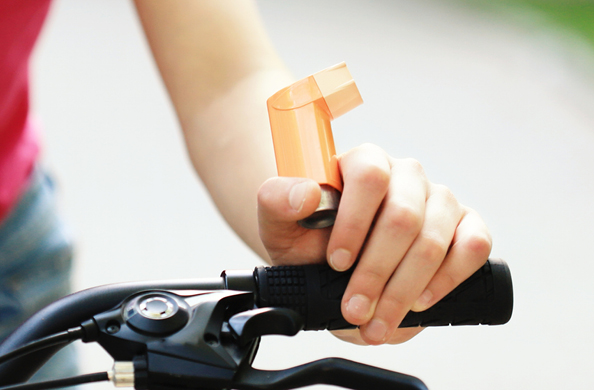
Athletes can store and self-administer medications in some circumstances.
- They must get prior, written permission from parents or carers on advice from the doctor, and agreement from the sport.
- Self-administered medication should only include:
- medication taken regularly, such as medications for asthma, allergy or diabetes
- emergency medication for conditions such as anaphylaxis.
- Controlled (Schedule 8) medications such as opiates, sedatives or stimulants should not be self-administered.
- Athletes should have action plans for conditions managed by regular medication. Authorised people should have copies of the action plan.
- The parent or carer should provide emergency medication in case the participant is unable to self-administer.
Reporting
Athletes are responsible for anti-doping requirements where required.
Athletes should report self-administration to the authorised staff to be recorded. An authorised person should be assigned as a point of contact to assist the athlete to manage their health condition.
In emergencies, athletes may have impaired ability to self-administer medications. Authorised people should administer instead.
Following travel
- Return unused medication to parents or carers in person or through another safe method.
- Return paperwork to the sport for record keeping or secure disposal.
- Store records in accordance with your organisation’s privacy policy or Australian Privacy Act.