Acknowledgement of Country: As we share a yarn today, we honour the stories that have been told on this land for thousands of years and acknowledge the Ngunnawal people as the Traditional Custodians of the land we're recording on, and we pay our respects to their Elders past, present and emerging.
Julie Inman Grant PSM: We need to treat online environments with the same seriousness and value as physical ones. They really are now an inseparable part of the overall sporting experience.
Dr Sarah Benson PSM: At the centre of all of these issues are people, or more than one person, who are impacted by this. So, it's really important, and the desire to respond quickly, but also in an appropriate way, is something that creates, I guess, challenges.
Julie Inman Grant PSM: You have rules of engagement on the field and on the court. We need to have the same rules of engagement applied to club and organisational sports where online abuse is concerned as well.
Dr Sarah Benson PSM: As we look over the horizon, how can we identify where the gaps or the challenges are against the emerging trends so that we can be proactive, I guess, in shaping the system for the future, so we make it easier to navigate in a preventative way, but also, as needed, in a responsive way as well.
Julie Inman Grant PSM: What we have to do with any new technology is look at how we harness the benefits and minimise the risk and the harms.
Tim Gavel: Hello and welcome to On Sideand the final episode in our special Online Safety in Sport series, I'm Tim Gavel. Across this podcast, we've explored the risks, the realities, and the human impact of online harm.
Today, we're looking ahead at what it takes to build safer sporting environments into the future.
We're joined by two national leaders driving this work at a system level. Julie Inman Grant is Australia's eSafety Commissioner, heading the world's first government agency dedicated to keeping people safer online. Welcome to On Side, Julie.
Julie Inman Grant PSM: Thank you for having me, Tim.
Tim Gavel: Also joining us is Dr Sarah Benson, CEO of Sport Integrity Australia, who's leading the country's response to integrity and safety in sport. Thanks for joining us, Sarah.
Dr Sarah Benson PSM: Thank you, Tim.
Tim Gavel: Well, together they'll share insights on leadership accountability and what genuine system wide change looks like. So, firstly to you, Julie, we've heard across this series how complex and personal online harm in sport can be. What stands out to each of you as the most urgent issue we need to address right now?
Julie Inman Grant PSM: Well, I think we really need to embed the whole idea of online safety into everything we do in sport. I mean, sport now is deeply digital. It's live streamed. We're using group chats. We're using social media for players to connect with fans. And sadly, along with that comes online abuse. I think it really came to a head over Covid for us, when the only way that people could really engage with sport was through broadcast TV, and then the cheapest seats in the house became the internet.
So, what I think we really need to do is we need to treat online environments with the same seriousness and value as physical ones. They really are now an inseparable part of the overall sporting experience. We want fans to enjoy it. We want players and officials, including referees, to also have enjoyment in sport. But we'll be talking a little bit more about how online abuse and harm can filter into kids sports and community sports, and I think we'd all agree as parents and members of the community, we've got to stop that before it proliferates further.
Tim Gavel: Yes, the speed of change has been quite incredible. Sarah, what about you? What stands out to you as the most urgent issue?
Dr Sarah Benson PSM: I think as CEO of Sport Integrity Australia, the most urgent thing is making sure that sporting organisations at all levels are equipped to respond and respond in a timely way, and most appropriate way. That way we can give the right assurances to those that are impacted by online harm, the assurances that they need. I think what I've observed coming into sport, more broadly, is these threats and harms don't sit neatly in one sport at any level or one country, and as these issues and integrity threats manifest, they permeate our national frameworks and structures like other threats didn't or haven't before.
So, it's really important that we're working together across the system to make sure as those threats move across borders or traditional frameworks and legal frameworks, that we are able to respond collaboratively. And I think we've even seen that as behaviours spill over from the online into the real world, we need different responses and need to be able to be connected with our partners in order to respond.
Tim Gavel: Julie, obviously we see the risks that currently exist. What's the gap between the risks and how sports are responding and sporting organisations are handling online abuse.
Julie Inman Grant PSM: We really need to move beyond compliance and embed online safety into everyday operations, rather than just responding when something goes wrong. I think we're at the point where almost nothing surprises us anymore. I'm thinking about the last 9 and a half years I've spent in this role, and we've seen online targeted racism, homophobia, misogyny. I remember landing from overseas and getting a phone call from Prime Minister Morrison, it was all about the response to the Tayla Harris photo; which was to me, an athlete in flight, it was such a beautiful photo, and he was absolutely disgusted with the online invective.
And so, I think some of this has been so confronting to us, like, really, you know, where are these people coming from? So, I think what we really need to do is, again, be proactive and preventative in our strategies.
And so that means raising awareness, which we've been doing really well with Sport Integrity Australia. We've got a jointly developed Sports Hub, but we need to build capability amongst all members of clubs and teams so that when something happens, they know how to respond rather than doing it on the fly. And that means knowing when to come to eSafety to report online abuse or when to go to police.
So, delivering the education and we've delivered quite a few sets of training. We often train new players. When you think about the professionals too, they're coming in here and they're expected to be role models, and they're thrust out into the public and into the media and social media, and we need to give them the tools they need to not only promote their voices online, but also to protect them. And then I think we need to continue strengthening policies. But what I'd say about the risks that we want to surface up is, like I said, how online abuse is really filtering down into kids’ clubs and sports.
So, we'll be announcing the findings from some pretty confronting research that we did that showed that 18% of kids in community sport are receiving cyberbullying. Sometimes it's through online chat, sometimes it's social media, but often it's from parents or teachers or coaches in their orbit, and it's what we would call lateral abuse, so, it's happening from with the within the organisation, which is very troubling.
Tim Gavel: Well, that is a worry because it's going from the sporting field to the wider sections of people's lives and it's very hard to police, isn't it, when it when it goes into other areas.
Julie Inman Grant PSM: For all the ills of social media, when it's online, it's visible. And what we worry about there is the amplification of harm and the normalisation of these kinds of racist, misogynistic or homophobic behaviours for instance. We know that 6% of kids are actually experiencing online hate, which is at a much higher level being targeted based on their culture, their religion or their gender.
When you think about, some of the initiatives we're undertaking at the highest levels of government, like our social media minimum age, you often hear the Prime Minister say, ‘hey, we want more kids out on the sporting field rather than on social media’, this is recognising that they are interrelated, and we do want them to be enjoying sport, every element of it.
We have rules of engagement on the field and on the court. We need to have the same rules of engagement applied to club and organisational sports where online abuse is concerned as well.
Tim Gavel: I'll ask you about the gender issue in just a moment. But Sarah, the protection of athletes on and off the court, that is paramount to Sport Integrity Australia, isn't it? As Julie was mentioning there, you know, we do have rules for what happens on the sporting field, but away from the sporting field, often the rules become a little blurred.
Dr Sarah Benson PSM: They do. And I think sporting organisations and the leaders of sporting organisations are really challenged, in, I guess, policing or responding to those threats as they arise. It's certainly, from the leaders that I've met with and continue to work with across sports, there is a true commitment to make sure that they are providing safe environments for everyone that participates in sport.
So, we have really strong partnerships to make sure that we are recognising where those integrity threats are coming from and how we can all work better together to work seamlessly across the agencies, across the organisations and across the levels. Because, at the centre of all of these issues are people, or more than one person, who are impacted by this.
So, it's really important. And the desire to respond quickly, but also in an appropriate way, is something that creates challenges for leaders, but a strong desire to make sure that they are accountable and transparent and really protecting the privacy and the safety of those all involved. So, it's a really challenging area, but there sure is that commitment across sporting organisations to come on this journey together and make sure we are strengthening the system as a whole.
Tim Gavel: What about gender targeting? We have heard from a number of people in this podcast series talking about the fact that women as leaders are targeted far more than men. How do you handle something like that?
Dr Sarah Benson PSM: Yeah, certainly the research, the stats, the data, across almost every country and almost every sporting organisation, do support that, that women are targeted as are other community groups across society. They do face a vulnerable environment that they enter, either as leaders, for simply making decisions or trying to make the environment stronger. And, I think the public commentary, the fan base, just the general public can't see necessarily the full picture. They don't have, necessarily, the full depth to what the issues are and what the strategies are to protect individuals.
So, I guess it makes it challenging, for sports leaders to make sure that there is that full awareness so that those criticisms, that abuse – whether or not it's officials on the sport field or athletes who are performing well or not so well – are protected. So, it's a really challenging environment. But the research, the data, is not necessarily getting any better in support of those community groups that are vulnerable in sporting environments.
Tim Gavel: Yes, Julie. You mentioned there Taylor Harris, we have spoken to sporting CEOs who are women who feel as though they're targeted far more than men. If Taylor Harris, that photo had been a man, it would have been lauded as a great photo. Because she was a woman, she was targeted with online abuse.
So, there is a real feeling out there, isn't there, that sometimes it does become gender specific and women are targeted more than men.
Julie Inman Grant PSM: Women are targeted in sport, in business, in government, in journalism, and that's why I started a program called ‘Women in the Spotlight’ or WITS back in 2018.
And we deliver a social media self-defence course specifically for women in sport and these other fields. What's really important to understand, and you saw a perfect microcosm of that playing out with the Tayla Harris incident, is that online abuse against women manifests differently than it does against men, and it's obviously tied to gendered norms that still exist in society, which are actually moving backwards rather than forwards, given the current geopolitical environment.
But it tends to be violent, sexualized, about traditional roles; you know, women should be in the kitchen rather than on the footy field. It has to do with their age, their appearance, their weight. And we've seen all of this manifesting in the kind of online abuse that exists towards women.
So, one of the things that we have done is we've made our social media self-defence training available to women in sport. I also just want to go back to how concerned I do think coaches and officials are. We've signed a number of MoUs around codes of conduct. I think there is broad scale awareness across the sporting community that this is an issue that's here to stay and it needs to be really addressed proactively and firmly. And so, it's taken a while to get there, but I think that moment has arrived and it's time for us to really move forward and combat this in any way that we can.
And I'd just like to say, one of the things that we can do as the online safety regulator is we can offer a safety net to individuals. We have a cyberbullying scheme, the only one in the world.
We have an image-based abuse scheme, when intimate images are shared without consent, these are often off field activities. But we have to remember that the more you're in the spotlight, the more your intimate images are currency to the media, and to others. And this this goes for AI, and I'm very concerned about how AI can be manipulated to nudify, to undress, to show people in sport doing insane things they didn't say or do. It's a very murky area and there are very few guardrails, but they can report to us at esafety.gov.au.
We’ll continue to work with SIA on developing the education and awareness materials and will keep pushing those out, and then we can provide system level support as well.
Tim Gavel: So, can you actually, we have spoken to a number of people in this series, we've talked about, getting certain things blocked before it comes to them, getting information taken down, images taken down. So, that's part of what you do.
Julie Inman Grant PSM: Yep. That's part of what we do. We have four different schemes that are probably relevant here, an adult cyber abuse scheme, but I would say that the threshold is very high. We have to prove, because of freedom of expression issues, we have to prove serious intent to harm and not mere emotional distress.
And it has to be menacing, harassing and offensive. We have a lower threshold where intimate imagery is concerned; we have about a 98% success rate in getting that down. And then the youth-based cyberbullying scheme is very successful as well, because I think even most of the social media sites that will permit more harmful content, kids are still off limits and things fall through the cracks. So, we can do that.
The government is now also working on something called a digital duty of care, which is predicated on eSafety’s ‘Safety by design’ initiative. So exactly as you said, working to build a scheme where we put the burden back on the platforms who have developed the most sophisticated linguistic and symbolic content moderation systems in the history of man. They know how to prevent and detect and prevent the hosting, sharing and amplification, and generation of this content.
But right now, outragement creates a vicious circle where players and sports teams are concerned, but it creates revenue opportunities for the platforms, so we need to put accountability back on them to stop it at the start.
Tim Gavel: And Sarah, just on sporting leaders, I guess we've heard from the eSafety Commissioner just about their mechanisms, what about sports leaders? How do they handle issues of online harm?
Dr Sarah Benson PSM: Yeah. So, there's, I guess, a number of policies that sit at different levels throughout sport but also Sport Integrity Australia is very focused on making sure that sporting organisations, at all levels, have the tools and resources they need to be able to not only respond but identify and also build positive cultures to try and shift towards that preventative space so that we are protecting rather than simply responding.
So, that is a key focus and obviously, in partnership with the eSafety commissioner, that is an absolute essential tool, making sure that, as I said, going back to my first response, that organisations are able to respond appropriately and in a timely way. So that's probably our biggest area of focus.
But there's a number of other things as well in the national coordination and national capability building space as well. So, our national Integrity manager framework is really critical as being a line of first defence or first point of contact in sporting organisations, and we are building capability into those integrity managers across sport, so that's really positive.
But also, national coordination across other government agencies, including law enforcement, to make sure that we are increasing and improving the way we're sharing information across government agencies and those agencies that have a common purpose or a shared purpose in protecting those in our community, and particularly, protecting all sporting participants. So, really important that we perform that role on behalf of sport.
Tim Gavel: Makes it tough, though, doesn't it? If sporting leaders themselves are being targeted online, as we've heard from CEOs in this sporting podcast series; how do they handle it, given that they're tasked with protecting their sports and their participants? What happens when they're under fire themselves?
Dr Sarah Benson PSM: It's a real challenge. And I think you would have heard it in the previous podcast episode, because navigating the system, as I said earlier, the challenges span the online world, the physical world. They span, multiple agencies, legal frameworks, and it's a challenge.
But, having agencies or organisations like Sport Integrity Australia, the eSafety Commissioner, the law enforcement networks, to be able to support individuals to navigate that complexity, I think that that's a role we can play. And I think as we look over the horizon, how can we identify where the gaps or the challenges are against the emerging trends so that we can be proactive in shaping the system for the future so we make it easier to navigate in a preventative way, but also, as needed, in a responsive way as well.
Tim Gavel: Julie, calling out issues of online abuse, people are becoming more aware, but more education is needed I'd suggest in this area so that people know what is right and wrong, where they can report what goes over the line; we're talking about people who are abused online, and I'd assume that you fall very much into this space in that they come to you and say ‘what can you do about it?’. But what level is deemed to be crossing the line?
Julie Inman Grant PSM: I think this is a whole of society responsibility and the kind of content that we see playing out online reflects underlying values and attitudes. There is something called the disinhibition effect, we sometimes see it in road rage when people are driving, and it's even worse when people are behind a keyboard and perhaps they're exercised about the way a particular game is going and they probably do and say things that they wouldn't say and do to a person's face. What we need to do is make sure that we're really clear about where responsibility and accountability lie.
We can do certain things and we can certainly provide that engagement, but we need to make sure that on the ground that when someone is experiencing online abuse, through one of these clubs or teams, that we're making sure that we’re taking it seriously, that we're using a human centred approach, particularly for young people who can feel a lot of distress.
I go back to something that Tanya Hosch said to me years ago that really brought everything home to me, around what a lot of Indigenous players in the AFL experience. They're experiencing racism in their everyday life. It's almost like death by a thousand cuts that is exacerbated every time they get a toxic or corrosive post or worse, a pile-on.
So, we as organisations and as leaders have to take responsibility and say the buck stops here. And there have been some really interesting approaches to trying to identify who say, the MCG members are, and preventing them from having some real consequences for these actions, which is very hard to do in the online world. It's hard for us as a regulator. We're coming up against the wealthiest, most powerful companies in the world who are domiciled overseas.
We use the tools we can, when we can. It really has to start with where you are, and if we're all holding the line in terms of what we accept and don't accept and make sure there are consequences. I think this is something that we can certainly apply with kids sport and club sport. If you see a kid behaving this way, this is a perfect opportunity to correct those kinds of behaviours so it doesn't follow them into their adult life. Deterrence is really important, but also people aren't going to feel protected if the rules are broken and a red card isn't handed out.
Tim Gavel: Sarah, just on education, Sport Integrity Australia does a great job when it comes to anti-doping, when it comes to making complaints, abuse in sport, etc. Is this a hard area for Sport Integrity Australia to navigate? Because we're dealing with a lot of community sports that are getting push with some of their athletes being abused. It's so wide, isn't it? It's hard to narrow focus on a specific area when it comes to education in this area.
Dr Sarah Benson PSM: Yeah, I think you're right, Tim. It's a real challenge. But all the integrity threats are a challenge because of the structure of sport. And we want to, as a national organisation, have the greatest impact at all levels and sometimes we are furthest away from where we want to have the greatest impact, as in the community level sport.
So, we do it in partnership and Play by the Rules, state level sporting organisations, national sporting organisations and national sporting organisations with disabilities are our key partners to make sure that we are building knowledge together and educating consistently and really clearly. There's always ways to improve how we educate and how we increase awareness, and that's certainly a focus, with our partners, on how we do that. And I think the, the other challenge that arises is because online harm or integrity threats to sport are so diverse and so varied.
We talk about harms arising from abuse, but those that are arising because of disgruntled gamblers abusing that may lead to competition manipulation or other vulnerabilities, or even as wide as availability of prohibited substances or doping methodologies that are just promoted from a wellness perspective.
There's a whole range of things that are enabled through that greater access that can manifest as integrity threats to sport. So, it's making sure that we've just got that solid understanding, and we empower our athletes and sporting organisations with that knowledge and with that awareness and that hopefully positions us towards a preventative space rather than responding. We can see some of the things that are coming, but we can't see everything.
So, it's about all of us staying connected and making sure we're increasing or updating that education awareness as we're seeing it or as we're expecting or anticipating it over the horizon.
Tim Gavel: Sarah, just on collaboration with the safety commissioner, how important is it for Sport Integrity Australia?
Dr Sarah Benson PSM: Oh, it's essential. As we explore and as we uncover how the online world enables some of those integrity threats to sport, it's absolutely a critical piece of the puzzle in our response, but also, as we prepare for the future, as we look towards 2032, we all have our eye on that as a bit of a target to make sure that we've got both our physical and precincts in check, but also our online environment as well. So, it's absolutely critical.
Tim Gavel: Yeah. So, I'd imagine this partnership between Sport Integrity Australia and the eSafety Commission is very important because you can provide an integrity aspect when it comes to sport. And Julie, you can provide that online experience. So, it's very important isn't it, to have this partnership.
Julie Inman Grant PSM: It sure is, and they can tell us what's happening on the ground. And so that helps us with trends. We're trying to keep an anticipatory eye on how technology is evolving and the harms along with it.
So, one that's been mainstreamed, but we started doing work around 3 or 4 years ago was around the manosphere and what a lot of people may not know is that often young boys and men come across manosphere or incelosphere influencers through fitness, physical fitness tips and health tips and sporting tips. They may want to be improving themselves and the way that the algorithms are starting to work. They will send them down much more damaging rabbit holes.
And for every problem, there is a solution. What young men tell us is that they're looking for role models. There are so many wonderful role models in sport. So, if we can do more again to promote these incredible athletes and the discipline they bring and the goodness that they bring to our country, to sport, which is part of Australian life, I think we can be a really powerful force when we work together, as an entire industry and such a potent cultural influence in Australia. I don't think there is this kind of engagement between regulators and sport integrity organisations anywhere else in the world and so this is really charting a course for the future.
As you say, 2032 will be a big opportunity for us to showcase this. Not only will we have the security infrastructure, but if we can have the online safety infrastructure in place as well to make sure that it's a thoroughly enjoyable experience for everyone, I think we'll be able to call that a big win.
Tim Gavel: Yes, and that plays into the culture aspect. Because that's what Sport Integrity Australia is endeavouring to do, is to create a better culture in sport in Australia, Sarah. Through education, through avenues for sports guidelines, National Integrity Framework. It's all part of creating that culture, which Julie was just talking about.
Dr Sarah Benson PSM: Yeah, absolutely. And when we look at most of our, probably biggest or most challenging integrity threats to sport, every time we have a discussion with our peers, we always come back to the solution is we've got to address our young; our children and our young people because the solutions sit with them. They're the future of our country. They're the future of sport.
So, a huge focus is that education awareness, we don't want to, and we're already seeing it through some of our research, we don't want those incidental behaviours to become accepted and normalised over time. And that's, I think, that's the risk, and that's the sort of mini crisis point that we might be at the moment.
And so, it's really on us to make sure that at all levels we call out, we identify, what is unacceptable behaviour, and not to come down hard, but to make sure that our responses are visible and understood, so that we can start building that cultural change. As leaders model this collaboration, and model and have a very visible presence, I think that sets the tone for our agencies to be working together as well, which again, helps shift that culture.
For us, I was thinking back to, you know, parents abusing referees, referees handing out red cards, like it's just a cyclical response to issues. To change the culture, it means everybody who plays a part in sport, from parents to fans to officials to coaches, that they understand and visualise what good and acceptable behaviours look like on the field and online and that we all work together to uphold those accountabilities. So, that's the only way we're going to change the culture both online and physically, that we all know our roles.
Tim Gavel: Yes. Coaches and parents play an enormous part in this, don't they? And I guess Julie and Sarah, you’re parents yourself, you understand exactly the influence that you can have on young children. I guess parents need to know their responsibility, but coaches are with young athletes all the time.
Julie Inman Grant PSM: I think we've all been there on the sideline where we've heard some or been very uncomfortable by an overzealous parent or coach who's either criticising their own child or another child on their team or, or whatever it is. We understand what that looks like and we have rules of engagement on the field.
We need to bring these into digital spaces and just for something for everyone to remember, that's easy to remember, what I call the four Rs. They apply universally, including online.
And that's Respect. Responsibility. So, taking responsibility for your actions. The need to build digital Resilience, the way we build resilience on the sporting field, but also critical Reasoning skills.
We use that for strategy on the field, but we really need to be able to better discern what's real and what's not and what's okay and what is not. So those four Rs are something I think apply to everyone.
Dr Sarah Benson PSM: I think just going back to taking that philosophy and those guidelines is the online world can be such a positive means for change as well, and we don't want to lose sight of that. We get very much focused and we are obviously because we're trying to protect against integrity threats, but as we shift the culture, we've really got to think about, which sometimes we lose sight of, just the positive means in which the online environment provides for us to help shift that culture through those positive role models. I mean, amazing.
Most children look up to somebody in their lives, whether or not it's a sporting star or somebody else in another industry. How do we use the online world to promote that hard work, that discipline, that respect, and all of those things that we're trying to instil in our young?
Tim Gavel: Have you thought much about the trends that you anticipate over the next 3 to 5 years? Have you thought, you've got to look out for this? I guess AI is an obvious one, but have you thought about things that we should look out for?
Julie Inman Grant PSM: I think AI is going to be challenging us in in a range of ways, because there is a little bit of an AI sovereignty arms race happening elsewhere and there's a lot of pushback on regulation. We're using our tools and standards to the extent we can and our complaint schemes, but we talk about, they're very visible harms happening today, we don't want them to become more catastrophic. Other than sort of turning the tide of bad behaviour online, I want to just go back to something very positive that Sarah said. Teams wouldn't have started to build social media presence and require the players to have it if it didn't add incremental value to the game, to the fan experience, to the really positive engagement players and coaches can have with fans.
So, what we have to do with any new technology is look at how we harness the benefits and minimise the risks and the harms.
Tim Gavel: Sarah, the next 3 to 5 years, what do you see as the major threat?
Dr Sarah Benson PSM: It's certainly obviously AI and all those advancements we anticipate or expect in technology and systems. But one that we're observing now obviously is with the exponential growth of online gambling, the impact that has on athletes. If a gambler loses a bet, then all bets are off for online abuse for an athlete – and even more concerning some of those areas of abuse extend to their families.
So, the real health and well-being impact of that abuse is just exponentially growing. As much as online gambling continues, and Australia is an attractive market to bet on our sport, we need to make sure we're finding a way to protect our athletes. I think the other concerning area is, as the online threats evolve, we are seeing some of those interactions spill over or out of the online platforms into the physical world.
It's not just – and it's probably the most serious concern, the mental health impacts – but it's also concerns around stalking and fixated behaviours which we're seeing, that's a concern. People are fearing for their safety, and also sport leaders are concerned about how they create a safe physical environment as well as online environment for their participants and for their workforce. I think the other thing that we're starting to understand, and look into more as well, is the intersection between integrity threats.
So, we might have things like illicit drug use and links to problem gambling, or online abuse linked to performance and then competition manipulation. So, just trying to take a look at that intersection. We are fortunate in Sport Integrity Australia to have a holistic view and response to integrity threats in sport, that's not mirrored globally and we certainly are leading the way there, so, we are maximising that opportunity because we do have those insights at hand to look at.
Tim Gavel: Julie, do you think that sport can be heartened by what we've heard so far today in that Sport Integrity Australia, eSafety Commissioner, working together for the betterment of sport and to protect all involved in sport?
Julie Inman Grant PSM: One hundred percent. We've made leaps and bounds over the past 5 or 6 years. I think the problem is fully recognised and people are very focused on solutions and working cooperatively with the organisations like ours that are trying to drive that change.
Tim Gavel: Sarah, you feel as though we're heading in the right direction in terms of protecting athletes?
Dr Sarah Benson PSM: I do. As I said, coming into sport, working with sport leadership teams and our counterparts across government, there is a strong commitment and strong expertise and knowledge there for us to build on. When I think about what's going to help us get there, it's our common purpose, and I think we do have a really strong commitment to that common purpose of protecting everyone in sport, and I think that will keep driving us into the future and to make sure that we are protecting sport and all those involved.
Tim Gavel: Alright Sarah, thank you very much for joining us today. Thank you very much, Julie.
Dr Sarah Benson PSM: Thank you.
Julie Inman Grant PSM: Thank you for having us.
Tim Gavel: That was Julie Inman Grant and Dr Sarah Benson. As this series has highlighted, creating safer online environments in sport requires more than awareness. It takes leadership, collaboration and a sustained commitment to change. There's no single solution, but with the right systems, culture and accountability, sport has the opportunity to lead, not just to respond in this space.
For any information or advice about online safety and sport issues, please contact the Sport Integrity Australia office or the eSafety Commissioner.
Thanks for listening to On Side and our Online Safety in Sport series.
On Side’s Online Safety in Sport podcast series, unpacks what’s changing in the digital environment and what it means for sport at every level.

Get On Side
New eLearning to support young athletes
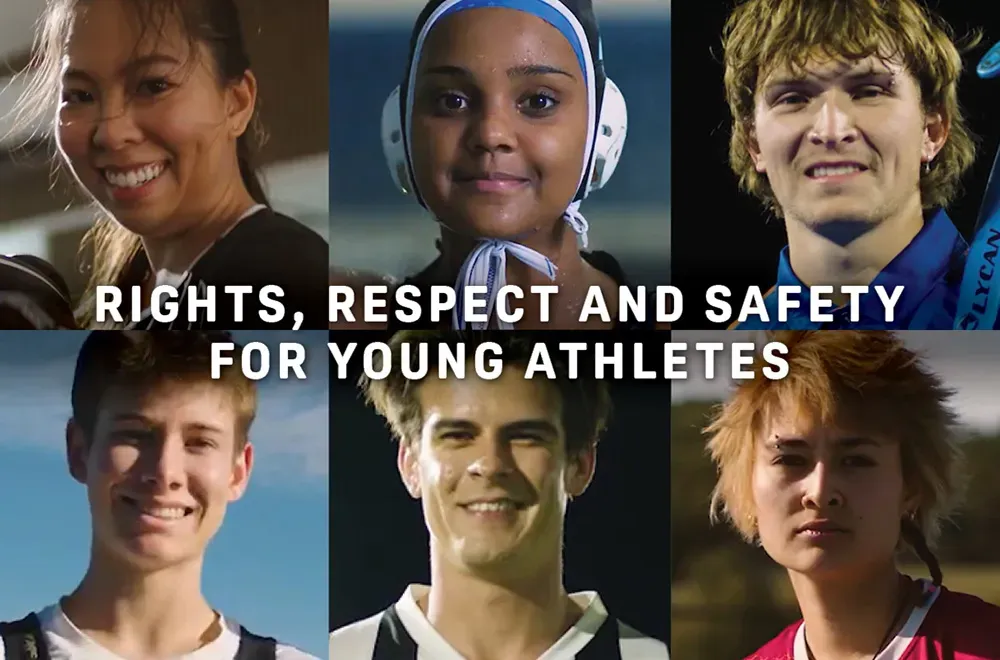
Sport Integrity Australia has launched a new eLearning course, 'Rights, respect and safety for young athletes', to support athletes to be safer in sport.