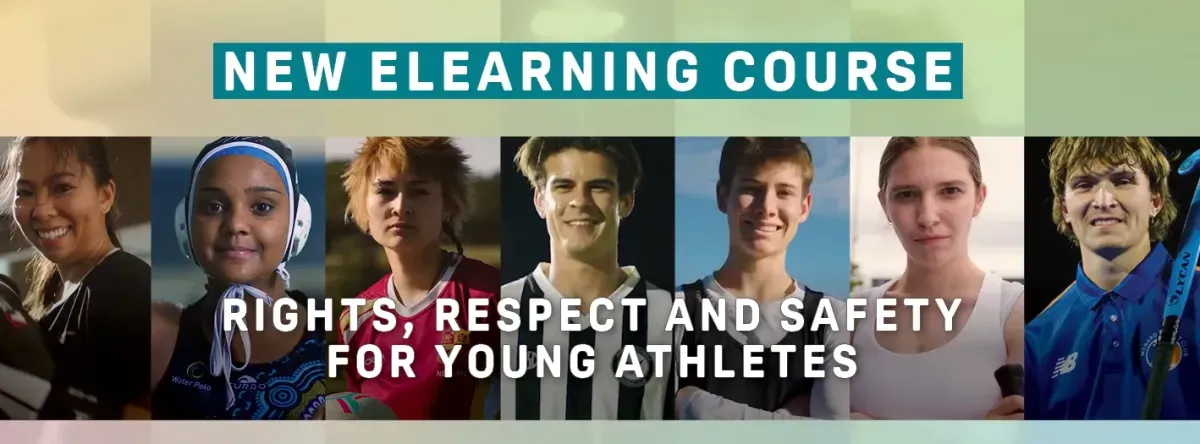
Sport Integrity Australia (SIA) has launched a new eLearning course to support young pathway athletes to be safer in sport.
The course, Rights, respect and safety for young athletes, will help young athletes to identify, and actively contribute to, safe environments in sport.
SIA’s Deputy CEO - Safety in Sport, Dr Paul Oliver, said the new education course is designed to empower young athletes to know their rights, know the risks, and know how to act.
“The transition period into elite pathways and high-performance sport is a critical one for children and young people,” Dr Oliver said.
Competitive sport demands focus, commitment and dedication. But thriving as a young athlete goes beyond performance.
– Dr Paul Oliver, Deputy CEO - Safety in Sport, Sport Integrity Australia
|
Our latest news, resources, podcasts, courses and webinars:
|
"This course is a one of its kind – it will help youth athletes to recognise and build safety in sport, for themselves and others.”
The course was supported by SIA’s Youth Athlete Reference Group, and its content was also informed by new research released earlier this year under the Hear me play survey which highlighted a greater need for young people to understand positive behaviour in sport.
Online safety is also a key part of the new course, with the eSafety Commissioner partnering on the educational content.
Women's Australian Football League athlete and professional boxer, Tayla Harris, brings her own experiences to the course, around being a good sport and staying safe online.
“As your profile grows in sport, you can become more exposed to criticism; I know this first-hand based on my experiences with an image taken of me on the field in 2019 when I was just starting out,” Ms Harris said.
Having the tools in this course to understand online safety and navigate abuse would have been really helpful.
– Tayla Harris, AFLW athlete and professional boxer
“When athletes feel supported and empowered, they can flourish in every aspect of life.”
Ms Harris also provides personal reflections and advice for anyone dealing with any form of harassment online, including relying on people in your own ‘inner circle’.
“That might be your family, friends, teammates, coaches or teachers – there a lot of people willing to help and hear you. Sometimes you just need to speak and say out loud that you’re going through something and it can take a huge relief off,” she said.
“Be really kind to yourself and know you don’t always have to be strong…you can seek advice and help.”
The course was developed using funding from the National Office for Child Safety.
While it was developed with high-performance athletes under the age of 18, the course is suitable for all sport participants aged 15 to 23.
The course is made up of 4 modules covering:
- how adults should respect young athletes and recognising inappropriate behaviour
- respectful relationships with other athletes and being a good sport
- recognising online harm and abuse, and how to respond
- what to do when someone isn’t following the rules, including being an active bystander.
It can be accessed via the: SIA Edge eLearning platform