Acknowledgement of Country: As we share a yarn today, we honour the stories that have been told on this land for thousands of years and acknowledge the Ngunnawal people as the Traditional Custodians of the land we’re recording on, and we pay our respects to their elders past, present and emerging.
Kate McMahon: Online's a wild west out there. Like, we're trying to navigate something that is really, really tricky.
Lisa Purves: Players can be targeted, athletes can be targeted for online hatred or bullying or anything like that, or even sexist or gender-based violence online.
Kate McMahon: Education helps us understand what the poor behaviour is and what we should be modelling and what you should be calling out so it's about that prevention rather than being reactive to when things escalate.
Lisa Purves: To create that culture where online harm and abuse is not acceptable, as a club you've also got to stand firm and you've got to stand consistent in that as well, so it is about taking action and it is about reaching out to the eSafety Commissioner and making sure that any instances adult with.
Kate McMahon: Online for any sporting environment can be a really amazing, vibrant, exciting place. It's where we tell our stories. It's where we celebrate our athletes and our participants and so, it's got a really positive impact as well, and it's like, let's keep it that way.
Tim Gavel: Hello, I'm Tim Gavel. Welcome to On Side and episode 2 in our new series discussing online safety in sport. Online harm isn't inevitable. With the right education, shared responsibility and early action sport can remain a safe, respectful place. Today we're joined by two leaders working at the forefront of this issue in Australian sport. Kate McMahon is Surfing Australia's National Integrity Manager, with a background in storytelling, media and marketing, and a lifelong connection to the sport, she's passionate about creating a culture that's safe, inclusive and fair for everyone. Kate, welcome to On Side.
Kate McMahon: Hi, thanks for having me. Glad to be here.
Tim Gavel: Also with us today is Lisa Purves, Director of Safeguarding at Sport Integrity Australia, and Lisa leads national efforts to strengthen child safety across the sporting sector, supporting organisations to better understand, prevent and respond to harm, including online environments. Lisa, thanks for joining us as well.
Lisa Purves: Thank you, Tim.
Tim Gavel: Well, together they bring practical experience and a sector-wide perspective on how we can better protect athletes and communities in today's digital world. Lisa, why is this an issue and what impact does it have on athletes and people involved in sport?
Lisa Purves: Yeah look, the biggest impact I suppose is what used to just happen on the field, there's now an online presence for even your local community club. There's usually a Facebook page or there's usually something. So that gives not just other players access to the athletes 24-7, it gives parents and spectators, athletes, access to the whole sort of gambit of sport, right across from, commenting on a certain player's performance or commenting on a picture, and all of that can have a really significant impact because children often can't distinguish between their sporting career and their personal life, so that becomes intertwined. And so they feel like the criticism that they sometimes get online for, say, poor performance or, an act of stupidity on the pitch, that's then targeted by some parents and spectators, they take that to mean that they themselves have kind of become this person that deserves this abuse, which is not okay in any setting. Also, it gives everybody access to the child 24-7 because there's no switching off from it.
Tim Gavel: Yes. Kate, what about your sport? I guess we're looking at impact, but we're also looking at education and preventing online harm. Tell us about your sport.
Kate McMahon: Yeah, well, in terms of surfing, there's a lot of adult and child, young people interaction, because we're all actually in the lineup together. So the boundaries are already down in this, I guess, what you could call a lifestyle sport. So you take that into an online environment and that can become a bit normalised as well in where those boundaries cross and understanding, education helps us understand what the poor behaviour is and what we should be modelling and what you should be calling out. So it's about that prevention rather than being reactive to when things escalate. So it's really important that way of connecting with people to go 'Oh, that's not cool. I actually don't have to put up with that. Or 'Something I've done is not that great, so pull myself up on that.
Tim Gavel: Yes. Just on online harm, the expression itself, people sometimes disassociate it with sport. They think 'Well, we're playing sport on the sporting field, social media online harm has nothing to do with what happens on the sporting field'. But they're closely interactive, aren't they, Lisa and Kate?
Lisa Purves: It absolutely has a lot to do with it because similar to, I mean, the Safeguarding children and young (people) policy now says – makes it very clear it's the behaviour that's either in person or online because we recognise the online environment is significant and it poses additional risks for sport because players can be targeted, athletes can be targeted for online hatred or bullying or anything like that, or even sexist or gender-based violence online, and that attack only comes because they are a sporting personality. And people become emboldened when they're not saying it face to face so they can tend to say more hurtful things, more harmful things than they would do if it was to be in person. So sport do have to take it seriously because just like we assess risks in the physical environment, we also need to assess the risk that athletes might be exposed to on the online environment in order to protect their mental health and wellbeing as an athlete as well. It's not enough to just say to them, 'Oh, switch off, cancel your social media.' Some of these pathway athletes rely on their social media to attract sponsorships and funding, et cetera. So it's not enough to just say to them, 'Oh, cancel your social media. No one needs social media.' We do need social media, everybody has a social media profile, and just because they're an athlete and just because they're heading towards professionalism doesn't mean to say that they should have to cancel their social media because other people can't be kind.
Tim Gavel: Because Lisa, that is a great response there, and I think, Kate, you sort of mentioned it earlier in that your world in a lifestyle sport, people do understand the difference between what happens in the sporting arena as opposed to away from the sporting arena, probably far better than some other sports.
Kate McMahon: To a degree. I think that it's different at obviously different levels of the sport. Like, club competitions is very community based and it a little bit reflects of what, I guess what we call our free surfing experience, it brings that into a contest experience, but it's still very community minded. I think it's just with the online sphere, is understanding, particularly for the children and young people, it's not separate how we might, older people might think that 'Oh, It's separate, it's online', that is their world. So what is going on in that space is absolutely indicative of their everyday lives, and so that's why what Lisa was saying, it's important to bring, to hold that, to model those behaviours in that space as much as we do on the sand or in the arena.
Tim Gavel: No, that is a great answer too. Lisa, what sort of online abuse that we're talking about here and how do you sort of describe some of the abuse and digital harm that is impacting on athletes?
Lisa Purves: Look, there's the obvious bullying. I suppose we refer to people as keyboard warriors. They'll feel emboldened by the fact that they're hidden behind a name or being faceless on online. But what can also happen is, children can be exploited online. The more they're online, the more exposure they have to that from people who would either seek to harm them, but also the latest trend is that, criminal gangs are also targeting children in order to exploit them, exploit them into sending them money saying that 'We've got your contact list', either a digitally enhanced photograph or potentially they'll have coerced a child into sending them a photograph. So the risks go from just a horrible comment or something not nice, right the way through to potentially sexual abuse and sexual exploitation. So this is why sports must take it seriously because it's not just the extremes in bullying, it can go to any lengths. What you can do in person to a child, you can do online to a child, and I think that's, as Kate made reference to, people of our age don't necessarily make that distinction. We think of the online world as being completely separate, but children and young people are embedded in the online world so the harms that they're exposed to in the physical environment is exactly the same on the online environment.
Tim Gavel: Yes, what about education, Kate? How does it empower athletes rather than placing the responsibility entirely on them?
Kate McMahon: It's bringing the language into their world. It's bringing these sort of dry policies that we might have into their everyday space of understanding what are the behaviours that we want to model. If everyone knows that and everyone's doing the right thing, then that inherently creates a better culture. But it's also about how to go about calling out when something feels a bit off and understanding that there's an avenue for that and that you don't have to just sit back and have these things compound and escalate and affect you in your personal life, in your life as an athlete, in your life as a club member, whatever it might be, that you've got somewhere that you can go, and whether that is your sporting buddy or your parent or your coach or your club president, it's about understanding that you're not alone and that this stuff, even though it's just online, is not okay, or that it's not just online.
Tim Gavel: Do you think sometimes young athletes in particular don't know where to go? They think 'Oh, I'm not going to make an issue of this' or 'I don't really don't know how to take it any further'.
Kate McMahon: I think it becomes, and based on the recent survey, Hear Us Play?
Lisa Purves: Hear Me Play.
Kate McMahon: Hear Me Play, sorry, is that behaviours can become normalised really quickly and when it's repetitive, it's even then more normalised and you're less likely to call something out. So that education is bringing it into your sporting context own language, and so you can connect with it as an athlete and as a participant. Education's key in the understanding.
Tim Gavel: What's right and what's wrong.
Kate McMahon: What's right and wrong.
Tim Gavel: Yeah.
Kate McMahon: And where to go if it's not okay and the kind of, yeah, the language we should be using to one another.
Tim Gavel: What are your thoughts on that, Lisa, in terms of education and understanding responsibilities, but also athletes understanding as well where they can go to report something that they believe is harmful?
Lisa Purves: Yeah. Look, Kate's absolutely right. Education is key. Helping children understand exactly what they need to speak up about is one of our key priorities this year, which is why we're focusing on trying to get that information out there to them about when to speak up and what to speak up about. Because they can just become, the abuse and harassment can become normalised and it doesn't help when people turn around and say to them 'Oh well, just delete your social media. Oh well, just ignore it, it was only a comment on social media.' If it's causing them harm, if it's causing them distress, that should be taken seriously because if it was done face to face, they'd absolutely take that seriously, and so just because it's online, you can't ignore it. And so I do think children get a lot of education in this in school systems, but I still think we need to change the narrative a little bit and say, whilst it's happening at school, it can also happen at sport. And sadly, that is that crossover so if it is happening in school, often the child in certain communities would be playing sport with those kids and that can exacerbate it and make it heightened, but again, I think for the sports club to kind of say 'Oh it's not our responsibility because it's happening online and that's not on the sport field.' I don't think we can accept that excuse anymore because it is happening as part of sport. It's, comments can be made about the child's sporting appearance or, a video could be posted that makes fun of the child from their sporting experience and none of that's okay really. We've got a HP Athlete Online Safety Course coming out shortly, and in that we have partnered with the eSafety Commissioner to develop an online module about online safety and in that we talk about the types of harm you can experience online and kind of just shine a light on it in an educative way to try and help children understand the behaviours they should be speaking up about as well.
Tim Gavel: Yes, because if it's not handled well, kids could walk away from sport. I'll ask you both that question because that could be a real issue, Lisa.
Lisa Purves: Absolutely. I mean, it can affect participation, but I think it can also have some long-lasting sort of, effects on the child's self-esteem and well-being as well. And so it might not just make them walk away from one sport, it might make them walk away from sport altogether. It might make them feel like they're not good enough to be in that space. When we know, again, Hear Me Play said the majority of children are in sport for fun and fitness and for the connections that they make and the connections that they make in person, and me as a parent, I know I want to create those connections in face to face and in person and get the kids off the online world because we know so much harm can happen to them there. So it kind of defeats the purpose again by pulling them out of sport and dropping those participation rates.
Tim Gavel: Kate, have you got a thought on that?
Kate McMahon: Yeah, and I mean, online for any sporting environment can be a really amazing, vibrant, exciting place. It's where we tell our stories. It's where we celebrate our athletes and our participants and so it's got a really positive impact as well, and it's like, let's keep it that way and take the things seriously that might be problematic.
Tim Gavel: Yeah. Is there a worry that people could walk away from sport because of social media harm?
Kate McMahon: Yeah, and even worse than just walking away from a sport. Like, we want to protect people's wellbeing, and obviously, we know there's different reasons for drop-off rates anyway, particularly with young girls, so, absolutely, negative social media experiences really risk having those drop-off rates.
Tim Gavel: What about the responsibility of parents and coaches? What role do they play?
Kate McMahon: It's more about rather than the surveillance, it's about that openness and that open communication about being that sounding board and not looking over a shoulder, but knowing that there's somewhere to go and how to identify what's cool and what's not cool in that kind of sporting context. I mean, they'd be doing it in their everyday context as well, but particularly in a sporting environment where, as Lisa mentioned, there might be a rhetoric about, 'Oh, it's just my sport and it's just an online comment and it's okay.' Being for, parents and coaches and club presidents and any personnel is being that sounding board and being that encouragement, that understanding what's the behaviours that we expect in sport and making sure that we're modelling those.
Tim Gavel: Just, I wonder about the ambiguity because on the sporting field and what happens within the sporting precinct sometimes is different to what happens outside the sporting precinct. So sporting organisations, what role do they play in this instance? Because sometimes the lines are quite blurred, aren't they?
Lisa Purves: Yeah. I think it goes back to Kate's comment about modelling the behaviour. So it's about saying we might have a Facebook page or we might have an Instagram page, but it's not okay as parents and spectators to go on and make those comments, and that can be really difficult for administrators to manage. It's another thing that they've got to do, and often this is a volunteer community and they've now got to monitor the Facebook page and switch off comments and delete comments, et cetera. But just acknowledge that if you're going to have that social media sort of presence, then there's an additional risk that comes with it and you need to be able to manage that. And to Kate's point, it is about educating your parents and educating your teams and your athletes and your spectators about what is appropriate for your organisation. So you're setting the tone, you're setting the culture and you're saying 'We won't tolerate online abuse and harm of any of our athletes or even the club.' 'We're not going to tolerate poor behaviour towards the club', calling out coaches or anything while you're on social media and encourage them to come in and speak to the club rather than, post that information for all the world to see.
Tim Gavel: Kate, the sporting organisation, what role does it play? As Lisa just mentioned, education is the key and I guess sporting organisations are volunteer run in many instances. How do they deal with issues away from the sporting field and what role does sporting organisations have in policing it?
Kate McMahon: If we're encouraging children and young people to come on the sporting journey, which is obviously what we want to do, then we definitely have that responsibility to help make it safe for them. Like that is, that's on all of us as adults in the sport and in this lifestyle sport to model those behaviours, so again, it comes down to bringing it into their own language and understanding how they're going to connect with that information. And luckily, you can measure and test that in terms of whatever marketing you're using, whatever marketing tools you're using to do that and social media tools, you can sort of measure and test what's resonating the most and keep doing that. Everyone's got the tools to be able to do that, whether you're a club level or an NSO, SSO level, in terms of what's hitting home with your eyeballs and your interaction and things like that, and just keep trying and keep experimenting with different things. We've got the resources, Sport Integrity Australia, eSafety Commission's all got the resources, it's working out how best for your sport do you communicate that message. It's not going to be the same for every sport.
Tim Gavel: Because I would imagine that it's not just about the complaint you go beyond the actual complaint to find out, I guess, the root of the problem and ensure that the culture is right, don't you?
Kate McMahon: In terms of when complaints come in?
Tim Gavel: Yes. When complaints come in, I would assume that you don't just deal with the complaint, but you deal with – is there a broader issue at play here?
Kate McMahon: Yeah, well complaints are always a tool to inform education. As well as dealing with the issue at hand, it's also looking for patterns and looking for opportunities to improve in your space, because it's not perfect and it's a, the online's a wild west out there. Like, we're trying to navigate something that is really, really tricky, and so just keep evolving and being open-minded to it, talking to young children and athletes, young children and young people, to see if there's anything going on that you might not be aware of, and really bringing it to the forefront, have those conversations.
Tim Gavel: Yes. Lisa, what does SIA provide? What does Sport Integrity Australia offer?
Lisa Purves: Look, we've got quite a few resources that are all downloadable, obviously, and they're there. But, you know, things like this podcast so people can listen to it on the way to training or on the way home from training, of course, but we're also offering stuff, I mentioned earlier, the HP Athlete eLearning course that we're putting together in collaboration with the eSafety Commissioner, and recognising that again, that that is both worlds coming together, what happened on the playing field can't be ignored from the online world as well, and the online world does have such an impact on players and athletes and also on their wellbeing. So we've also got a number of resources on our website but to be fair, if you're looking for online safety and advice, I would direct you towards the eSafety Commissioner, they've got a sports hub there and they've got some excellent resources. Also, if, just say for example, something awful was posted on social media and you wanted to try and get it taken down, the eSafety Commission is the place you'd go to try and get that taken down as well and they're there to help you with those complaints and help you with those issues. But again, to Kate's point, to create that culture where online harm and abuse is not acceptable, as a club, you've also got to stand firm and you've got to stand consistent in that as well so it is about taking action and it is about reaching out to the eSafety Commissioner and making sure that any instances are dealt with, even the small sort of microaggressions on social media are dealt with, as well as the bigger issues as well. So staying consistent with that and embedding that sort of zero tolerance towards bullying and harassment and what can start off as a small negative comment can quickly escalate, we see these kind of pile-ons, if you like. I'd probably use, Ray Gunn from the Olympics as an example. She qualified for the Olympics, she entered the Olympics, and then all of a sudden she had worldwide notoriety with petitions to get her removed and everything else, because people saw what other people were saying and then, pile on that and so, the abuse becomes more and more and more and it just doesn't stop. So it's about stopping it as it happens, stopping those small microaggressions and setting that culture and setting that tone that none of it's acceptable.
Tim Gavel: Yes, and I liked your point earlier, Kate, when you talked about the constant communication with your athletes. I think that's a really important point in really digging in and finding out if there is some form of issue there, finding it out before and getting it early. And the communication is vital.
Kate McMahon: Yeah. We're about prevention, not just grappling for that reactive behaviour when things escalate, it can be too late then, as Lisa just pointed out. So there's a number of ways that can be done, whether it's sitting in circles and talking about it or recently I wrote a blog article on that for the Safer Internet Day, and used all the tips that the eSafety Commissioner put out within the article and lots of links and things like that, and then you can use that article on social media or you can use it in your e-newsletters. Like there's different ways that you can sort of reach your audiences and to be able to get those conversations going. Anyone can do that, any sport can do that.
Tim Gavel: Sounds like that is being proactive. Lisa, thanks very much for joining us today and thank you very much, Kate.
Kate McMahon: Thank you so much.
Tim Gavel: And I guess the messages out of our session this morning, education, understanding what's right and wrong, but that proactive approach that we've heard from Surfing Australia. So thank you Kate and Lisa, for sharing your insights today. Online safety in sport is a shared responsibility, and as we've heard, creating safer environments starts with education, awareness and taking action early. If you'd like to learn more or access resources for your sport, you can visit Sport Integrity Australia's website. Thanks for listening to On Side and this special series about online safety in sport. Join us for episode 3 when we speak to Olympic climber Campbell Harrison and Rowing Australia's CEO Sarah Cook, who share personal experiences of online harm and its impact.
On Side’s Online Safety in Sport podcast series, unpacks what’s changing in the digital environment and what it means for sport at every level.
Get On Side
New eLearning to support young athletes
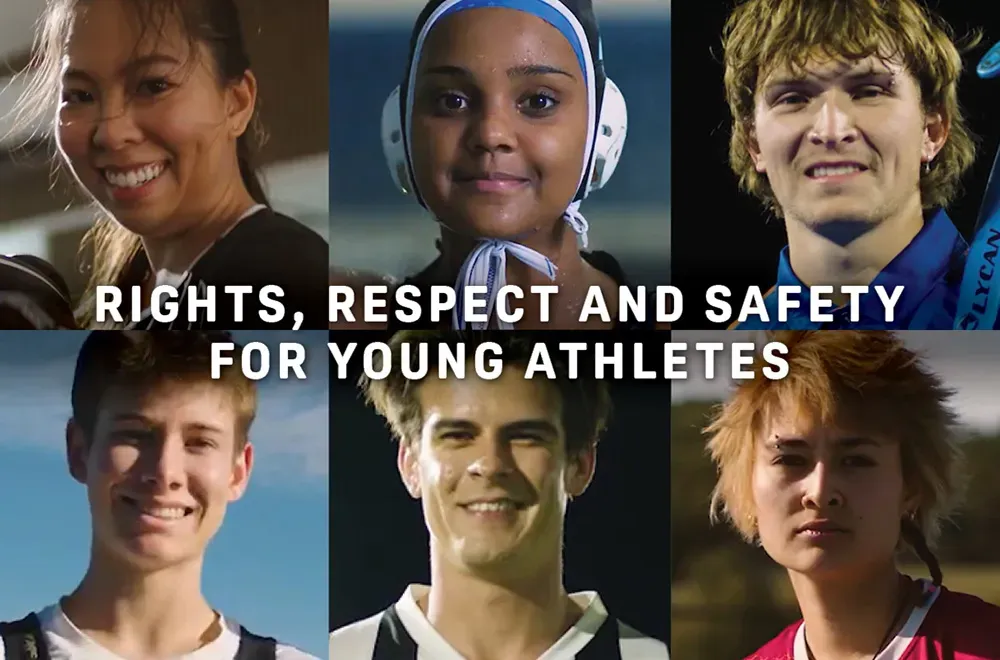
Sport Integrity Australia has launched a new eLearning course, 'Rights, respect and safety for young athletes', to support athletes to be safer in sport.