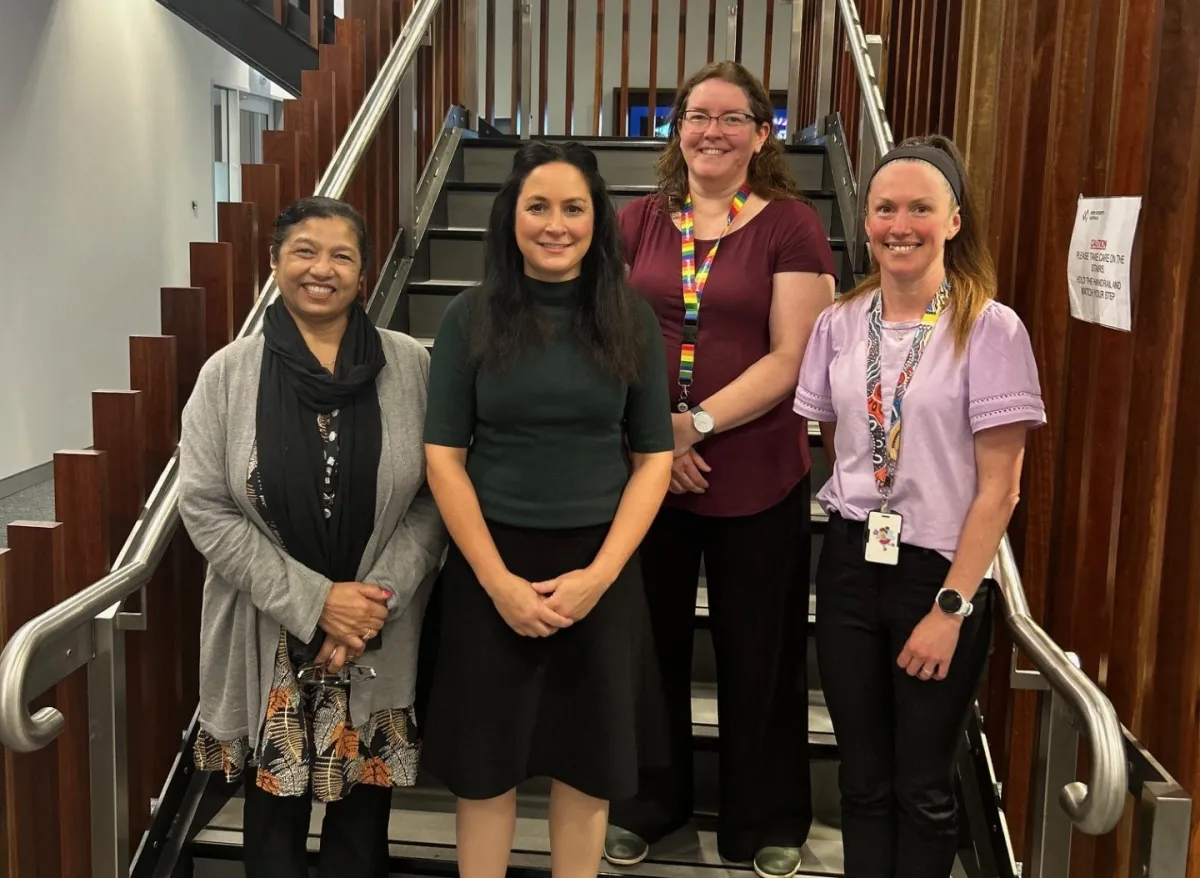
This International Day of Women and Girls in Science, Sport Integrity Australia (SIA) proudly celebrates the women and girls who are shaping the future of anti‑doping science in Australia, strengthening detection capabilities through innovation.
At SIA, science is core to our mission to protect the health of athletes and ensure a fair and level playing field.
The women of SIA’s science and medicine programs play a critical role in advancing the techniques and technologies that keep sport clean, safe and fair.
Their expertise spans differential equations, organic and analytical chemistry, forensic and biological sciences, data modelling, and research design – each contributing to the evolution of anti‑doping practices and the global fight against doping.
|
Our latest news, resources, podcasts, courses and webinars:
|
SIA’s Chief Science Officer, Vanessa Caig, is proud to lead SIA’s Science and Medicine team, which includes a high proportion of experts who identify as women.
“Our science and medicine capabilities are buoyed by a group of formidable women who are specialists in their fields,” Ms Caig said.
When it comes to our anti-doping and sample analysis programs, we know that every sample result tells a story. Our role is to read that story with precision and integrity because athletes and Australian sport deserve nothing less.
– Vanessa Caig, Chief Science Officer, Sport Integrity Australia
Sport Integrity Australia plays a central role in refining testing methods, enhancing sample stability protocols, and contributing to collaborative research with national and global partners.
These advancements are helping Australia remain at the forefront of anti‑doping science, ensuring that our testing program is both robust and responsive to new doping trends.
“For many of these scientists at SIA, the path into anti‑doping was shaped by a passion for applying science to real‑world challenges, specifically those that protect athlete welfare,” Ms Caig said.
“Their work is meticulous, often undertaken behind the scenes and underpinned by an unwavering commitment to fairness and integrity.
“A timely, real-world challenge is the work of the World Anti-Doping Agency’s Working Group on Contamination, which is reviewing sources of contamination world-wide and how the anti-doping regulations could be improved.
“SIA’s own CEO, Dr Sarah Benson, is providing guidance and recommendations to the group – including our own science and research findings – to explain trends seen in Australia.”
As science continues to evolve, so too does the contribution of women and girls in shaping its direction.
SIA is proud to support a workplace where women and girls in STEM can thrive, lead complex scientific programs, and influence national and international approaches to clean sport.
About International Day of Women and Girls in Science
The International Day of Women and Girls in Science, held globally on 11 February, is an initiative of the United Nations to promote full and equal participation of women and girls in science, technology, engineering and mathematics (STEM).
The day highlights the critical role women play in research, discovery and scientific advancement—and the importance of removing barriers so that girls and women can pursue and excel in STEM careers.
SIA proudly supports this mission by championing a workplace where women lead scientific innovation in anti‑doping and sport protection.
You may be interested in:
Vaulting between sport and science
Meet Deb Greenbaum – former Australian gymnast, Pharmacist and SIA Educator
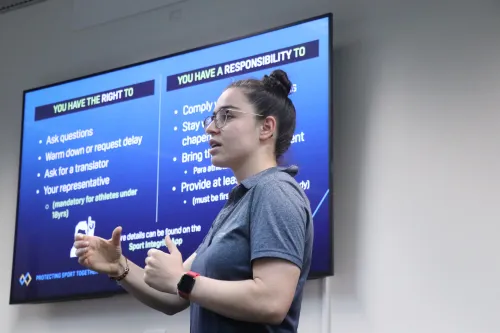
and former Australian gymnast.
For Deb Greenbaum, sport and science have never been separate worlds – they’ve been quietly connected since her first gymnastics class at age five. The discipline, precision, and attention to detail that shaped her as an athlete became the same skills that later guided her into chemistry, pharmacy, and ultimately, sport integrity.
By eighteen, during her international coaching accreditation, Deb first saw just how closely biomechanics and physiology mirrored the techniques she practised in the gym.
That spark of curiosity led her to study pharmacy, where she discovered the emerging field of sport pharmacy. It was then she realised she could combine her love of science with her passion for clean and fair sport.
With support from mentors at The University of Sydney (Professor Andrew McLachlan and Associate Professor Betty Chaar), she explored how pharmacists can help athletes avoid unintentional doping – research that set the foundation for her work today.
In her role as an Educator at Sport Integrity Australia, Deb consistently uses her scientific background in education sessions with athletes.
“It allows me to explain complex topics like anti-doping and medication use in a way that’s accurate and practical – I can bridge the gap between scientific detail and athlete experience to provide relatable and educational sessions,” Deb said.
Deb believes even basic scientific literacy empowers athletes to make safer decisions in a world full of supplement claims and performance promises. And for young girls passionate about both sport and science, she says the connection is already there: every movement, recovery session, and performance moment has science at its core.
“Sport makes science tangible, every training session involves physiology, nutrition, and biomechanics,” Deb said.
When girls see that connection, it turns abstract concepts into something they experience daily. Whether they are interacting in sport as a coach, official or athlete, there is always something that can be linked back to science.
– Deb Greenbaum, former Australian gymnast, Pharmacist & Sport Integrity Australia Educator
When asked what she would say to a young athlete who enjoys science but doesn’t yet see how those interests can intersect –
“I’d say look closer, every aspect of sport is rooted in science, from recovery to performance analytics. Combining both passions can open doors to careers that make a real impact on athlete health and fairness.”
Where Sport Meets Science
Meet Sia Kazantzis – Sports Pharmacotherapeutics tutor, SIA Educator and Doping Control Officer

and Sports Pharmacotherapeutics tutor.
From a young age, Sia Kazantzis’ world revolved around sport. What she didn’t realise then was that her love of sport – and the occasional injury – would set her on a career path that blended science, health and integrity.
Early experiences with sports clinicians sparked her interest in how science supports injury management and performance.
Combined with a strong interest in science at school, this laid the path to podiatry. Later, feeling ready for a new challenge, she returned to her passion for sport and completed a Master’s in sports medicine—opening doors she hadn’t known existed.
Across her roles with athletes, sporting organisations and now in integrity at SIA, Sia (pun fully intended!) draws on her training in podiatry, sports medicine and sports pharmacology.
Her clinical background helps her understand the pressures athletes face, while her pharmacology knowledge supports clear communication around treatment, medication and anti-doping expectations.
As both a Clean Sport Educator and Doping Control Officer, she sees her work as connecting theory, clinical practice and regulation so athletes can make informed, safe decisions.
What drives her is simple – a love of helping people.
“Working closely with athletes in this space … you help them achieve their goals and dreams,” she said.
From helping them get back on the field if they're injured, to making informed decisions about medications and supplement use, as well as playing a role in keeping sport safe and clean.
– Sia Kazantzis, Sports Pharmacotherapeutics tutor, Sport Integrity Educator and Doping Control Officer
For Sia, sport is a powerful entry point into science – especially for girls. It shows the real-world impact of fields like physiology, nutrition, biomechanics, pharmacology and integrity.
Her message to young people who love sport but haven’t yet seen the science connection: the overlap is huge, and the career possibilities are endless.
“I feel sport can be the sweetener because it makes science relatable and exciting … it also shows that curiosity, problem solving and critical thinking can directly impact the lives of athletes and that is very rewarding.”