Every year on 3 December, International Day of People with Disability invites Australians to reflect on what inclusion looks like when it is genuine and lived rather than symbolic.
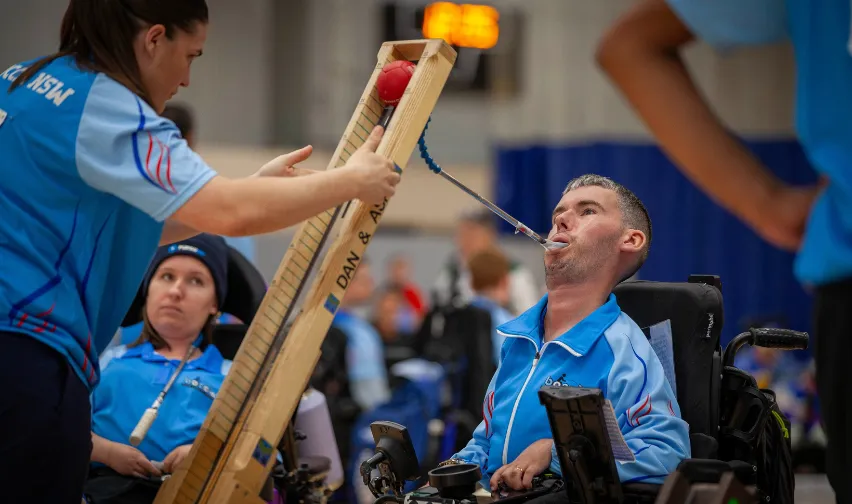
Few sports capture that vision more clearly than the sport of boccia, a Paralympic discipline designed specifically for athletes with high support needs. It’s often described as the most inclusive sport in the world, and within the Australian boccia community, that belief is backed by action.
Boccia is one of only two Paralympic sports not adapted from an Olympic counterpart. It was built for people who cannot simply modify a mainstream sport to suit their ability. For many athletes, boccia is the only sport where participation is truly possible.
For Australian Paralympian Daniel Michel, boccia is the sport where he found both access and excellence. He remembers attending a come and try day at age fifteen and assuming it would be another activity out of reach. Instead, in Daniel’s words, he discovered “not only was it a sport for people with disabilities, but it was also for people exactly like me.”
|
Our latest news, resources, podcasts, courses and webinars:
|
That moment changed his life and unlocked his competitive drive. Today he is ranked number one in the world and still loves boccia for its strategy and precision.
“It’s very much a thinking person’s game, with so much detail and nuance that people don’t understand until they really watch it,” Daniel said.
Many others found boccia through family or community.
South Coast referee Heike Fabig first encountered the sport because of her sons, who both adored it. After losing them to a rare genetic condition, she and her husband made a promise to continue contributing to the sport as their children’s legacy. That promise drives her commitment to building a safe, fair and supportive environment for every athlete.
“Boccia has to be a super safe sport,” she said.
We are a sport for the most physically disabled athletes. They are some of the most vulnerable people in this country and we have to make sure they can do this in a safe way.
– Heike Fabig, Boccia referee
That commitment is shared across Boccia Australia, especially as the sport has grown rapidly in recent years.
Chair of Boccia Australia, Richard Boele, recalls how fragile the organisation once was. When he joined the board seven years ago, there was one part-time staff member and the organisation was close to shutting down. Now the organisation has 14 staff and is hosting international events that showcase Australian capability and inclusion.
With growth has come a sharper focus on integrity. Richard speaks often about safeguarding because, as he puts it, “we include the most vulnerable athletes in the sport system; no one has athletes more vulnerable than our athletes”.
He believes the key is normalising conversations about safety and integrity. He constantly reminds referees, volunteers and athletes that if something doesn’t feel right, to come and talk to him.
“We are going to stand alongside them. We need to create a culture where people feel free and/or confident or trust us to deal with sensitive matters.”
Coaches see the importance of this in action every day.
High performance coach Bruna Accurso, who began her career as a disability support worker, understands both the sporting and personal needs of her athletes. She speaks openly with them about travel challenges, accessibility barriers and anti-doping responsibilities. Many boccia athletes take medications or daily therapies that intersect with sporting rules, so Bruna emphasises education.
“They should not be choosing between performing or having quality of life; that education piece is really important,” she said.
She also values the community spirit of boccia, which sets it apart from many competitive environments.
“You would never see someone celebrating because of a missed ball,” she said.
People clap because the opposition just got a point. It is really competitive, but everyone supports each other as a community.
– Bruna Accurso, High performance coach
This sense of belonging is echoed by BC3 athlete Moustafa Ardati, who made his international debut at the 2025 World Boccia Challenger held in Canberra in November. Competing against world ranked players gave him confidence that he belonged on the global stage, but it was the culture that left the deepest impression.
“There are no egos,” he said.
Everyone wants to see other players succeed. Boccia has a different culture. It is a family.
– Moustafa Ardati, Boccia BC3 athlete
Events like the Challenger being held on home soil are vital for athlete development, especially given the significant barriers Australians face when travelling overseas. Long haul flights can be physically taxing and at times unsafe for athletes who cannot access onboard toilets or rely on complex wheelchairs. Being able to compete at home levels the field and opens opportunities to newer athletes.
National championships play a similar role in strengthening connection. Paralympian Jamieson Leeson describes them as a highlight of the year. She values the chance to see athletes of all classifications together, from social players to those preparing for Paralympic qualification.
There is a big variety of abilities...it’s great having people from all over Australia with all ranges of abilities..
– Jamieson Leeson, Paralympian
None of this happens without volunteers, referees and support staff who give their time to help athletes succeed. Dan Michel acknowledges this openly.
“Without volunteers, we would not be able to play; we always tip our caps to them.”
At the heart of boccia is a simple truth that NSW coach Ken Halliday expresses clearly.
“Most of these athletes would not be able to play any other sport if it was not for boccia.”
He has seen lives transformed by the opportunity to compete, belong and succeed. He has also witnessed the joy, resilience and pride that sport can unlock. His message to the wider sporting community is straightforward.
“Boccia is the most inclusive sport in the world,” he said. “If it was not for boccia, many of these athletes would not be out playing sport at all.”
On this International Day of People with Disability, boccia shows what is possible when sport is built for everyone from the start. It shows that integrity and inclusion strengthen each other. And it shows that when you design with accessibility in mind, you do not just create a sport – you create a community.
To learn more about boccia visit the Boccia Australia website